
Navigating the healthcare system as an adult
Understanding the healthcare system can feel confusing and overwhelming. It’s important to have clear information and support to help you understand your options! Below is some information to help get you started.
NOTE: There are many hyperlinks to credible resources and websites throughout this section. You can click on the links to get more information if you need it.
Learning Objectives
By engaging with this section of the module, you will be able to:
Learn about how the Australian healthcare system works, including what the government does to support it.
Know what healthcare services and providers are available and how they can help you.
Understand how to access healthcare through systems like Medicare, the NDIS, and private health insurance.
Plan how to work with healthcare providers and build a healthcare team that suits your health goals.
Make decisions about healthcare costs by learning about things like Medicare, bulk billing, and the PBS.
Know what allied health professionals do and how they can support your health and well-being.
Definition
Healthcare Systems
A healthcare system is made up of healthcare professionals, services, and resources that work together to help individuals (those who use the system) stay healthy and get medical care when they need it.
The World Health Organization (WHO) says a good healthcare system is one that “delivers quality services to all people, when and where they need them”.
People with disabilities often have more health issues than others, so they may need to see doctors or use healthcare services more often. Young adults with cerebral palsy (CP) moving to adult healthcare need to learn about the services available, how to use them, and how to pay for them.
Levels of Government Involved
All three levels of government (federal, state, and local) help set up, run, and maintain the healthcare system.
Overview of the Australian Healthcare System
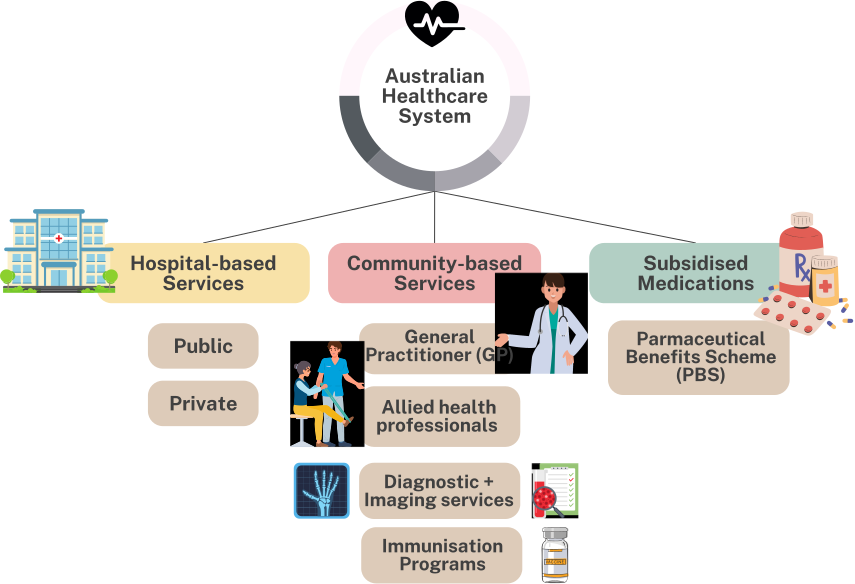
Australian Healthcare System
The Australian healthcare system has both public and private providers.
Please click on each of the buttons below for more information.
Hospital-based Services
Emergency Departments provide urgent care for people who need immediate attention.
Inpatient care is for people who need to stay in the hospital to treat acute health needs or have planned surgeries.
Specialist outpatient clinics where people can be seen, for example, by medical specialists, allied health professionals, or a team of health professionals working together.
Community-based Services
Care from general practitioners (GPs) and medical specialists is available throughout Australia.
Treatment from allied health professionals like physiotherapists, occupational therapists, speech therapists, and exercise physiologists.
Diagnostic services like blood tests and imaging services like x-rays and CT scans are offered.
Immunisation programs are offered to help protect against illnesses and diseases.
Access to Subsidised Medicines
The Pharmaceutical Benefits Scheme (PBS) subsidises many medicines prescribed by doctors.
Extra help is available for people with a healthcare or concession card. People with these cards get additional subsidies for medicines.